



Harness or Collar for Walking: Which Fits Best?
That moment your dog spots a pigeon across the footpath can answer the harness or collar for walking question very quickly. If they hit the end of the lead coughing, twisting or launching like they have somewhere urgent to be, their walking gear needs a closer look. The right choice is not about what looks cutest in the park – although a gorgeous matching set never hurts – but how safely and comfortably your dog can move.
For some dogs, a well-fitted flat collar is perfectly suited to a calm daily stroll. For others, especially enthusiastic pullers, tiny breeds and dogs with sensitive necks, a harness can offer kinder, more practical control. Here is how to choose without turning the lead aisle into a guessing game.
Harness or collar for walking: start with your dog
There is no universal winner because dogs do not come in one shape, size or temperament. A chilled older Labrador ambling beside a pram has different needs from a whippet that can reverse out of almost anything, or a young cavoodle whose entire body wiggles when another dog appears.
Think about what happens on most walks, not your dream walk. Does your dog stroll on a loose lead? Pull towards smells? Lunge at scooters? Have a short nose, a delicate windpipe or a history of neck discomfort? Their real-life behaviour should guide the decision.
Age matters too. Puppies are still learning what lead pressure means, so comfort and a secure fit are priorities. Senior dogs may have arthritis, reduced balance or skin that is more sensitive to rubbing. A piece of gear that worked brilliantly two years ago may no longer be the best fit.
When a collar works beautifully
A standard flat collar is a simple, practical essential. It is ideal for carrying identification tags and is often the easiest option for dogs that already walk calmly without pulling. It is light, quick to put on, and less likely to interfere with natural shoulder movement than a poorly designed harness.
For a dog with reliable loose-lead manners, clipping the lead to a collar can feel uncomplicated and comfortable. Many dogs also wear a collar day to day for ID, then use a harness only when it is time to head out the door.
The catch is pressure. When a dog surges forward, all of that force lands around the neck. Repeated pulling can be uncomfortable, and it is a particular concern for small dogs, flat-faced breeds and dogs prone to tracheal sensitivity. A collar should never be used as a tool for sharp corrections or constant restraint.
Fit is non-negotiable. You should be able to slide two fingers comfortably between the collar and your dog’s neck. Too loose, and a clever pup may slip free. Too tight, and it can rub, restrict breathing or cause coat breakage – not ideal for a freshly groomed, silky neck ruff.
Choose a collar for the right reasons
A collar can be a great walking choice when your dog is comfortable on lead, does not pull, and has no health reason to avoid neck pressure. It can also be handy for quick toilet breaks and low-key outings where you need minimal fuss.
It is not automatically the better choice because it is smaller or easier to clip on. If your dog spends the walk straining into it, a harness is worth considering.
Why a harness can make walks more comfortable
A properly fitted harness spreads lead pressure across a broader area of the chest and body rather than concentrating it at the throat. That is why it is often the go-to for pullers, puppies in training, toy breeds and dogs that cough or gag when walked on a collar.
A harness can also give you more control in busy situations. Near traffic, around unfamiliar dogs or on a packed weekend café strip, a secure body attachment can make it easier to guide your dog without yanking their neck. For escape artists, a well-designed harness with an additional belly strap may offer extra peace of mind.
But let us clear up one common misconception: a harness does not magically teach a dog not to pull. Some harnesses allow a determined dog to put their full body weight into towing you along. The harness provides a more comfortable way to manage force, while training teaches the actual walking skill.
Look for a design that sits clear of the throat and allows the front legs and shoulders to move naturally. Harnesses that cut straight across the front of the shoulders can restrict stride on some dogs, particularly when worn for long walks. The best shape depends on your dog’s build, so watch them walk in it rather than judging fit only while they are standing still.
Front clip, back clip or both?
The lead attachment point changes how a harness feels in use. A back clip is simple and often suits dogs that already walk politely. It is also popular for small dogs because it keeps the lead away from their legs.
A front clip can be useful for dogs learning not to pull, because forward pressure gently turns their body back towards you. It should not wrench the dog sideways or be used to drag them into position. If your dog is powerful, reactive or unpredictable, chat with a qualified force-free trainer about the safest setup for your situation.
A dual-clip harness gives you options. Some owners use both points with a double-ended lead for added control during training, then move to one attachment as their dog’s lead manners improve.
Fit checks that save you from rubs and escape acts
Even the prettiest harness is no good if it rubs under the armpits, shifts around the chest or lets your dog perform a Houdini manoeuvre halfway through the walk. Check the fit before every adventure, especially with puppies that seem to grow between breakfast and dinner.
Use these quick checks:
- The harness should sit snugly without digging in. You should generally fit two fingers under each strap.
- The chest section should sit on the breastbone, not high across the soft throat.
- The straps behind the front legs need enough clearance to avoid rubbing the armpits as your dog moves.
- Your dog should be able to walk, trot, sit and sniff with a natural range of movement.
- Buckles, rings and rough edges should not sit directly on skin or catch in the coat.
After the first few walks, inspect the areas under the legs, around the chest and behind the shoulders. Redness, flattened coat, missing fur or repeated scratching means it is time to adjust the fit or try another style. Dogs rarely fill out a complaint form, so their body language does the talking.
If your pup has a long, curly or double coat, take a moment to check beneath the fluff. Thick fur can hide rubbing, and trapped moisture after rain or a beach walk can irritate the skin. Let gear dry completely before the next outing and wash it according to its care instructions. Clean accessories are kinder to skin and look much sharper, too.
The lead matters just as much
A well-fitted harness paired with the wrong lead can still make walking awkward. For everyday use, choose a lead length that gives your dog room to sniff without allowing them to reach every road edge, cyclist or tempting chicken bone.
Retractable leads can be useful in the right open, safe space with a dog that has dependable recall, but they are not ideal for busy footpaths or dogs that pull. The thin cord can be hard to manage, and the constant tension can make loose-lead training harder. A fixed lead gives clearer communication and more immediate control when you need it.
Avoid clipping a lead to a collar and harness at the same time unless you are using a purpose-designed training setup. Multiple attachments can tangle, put uneven pressure on your dog or leave you fumbling when a kangaroo suddenly appears at the oval.
Comfort is only half the walking equation
The gentlest gear in the world cannot replace gradual training. Reward your dog for walking near you with a loose lead, plenty of sniff breaks and tasty treats that are worth their attention. If the lead tightens, pause or calmly change direction rather than pulling back. Consistency teaches your dog that keeping the lead slack gets them where they want to go.
For dogs that lunge, bark or panic around triggers, create more distance and get professional support early. This is not about having a naughty dog. It is about helping them feel safer while protecting everyone around you. A qualified trainer can assess whether the issue is excitement, fear, frustration or something physical that needs a vet check.
So, what should your dog wear?
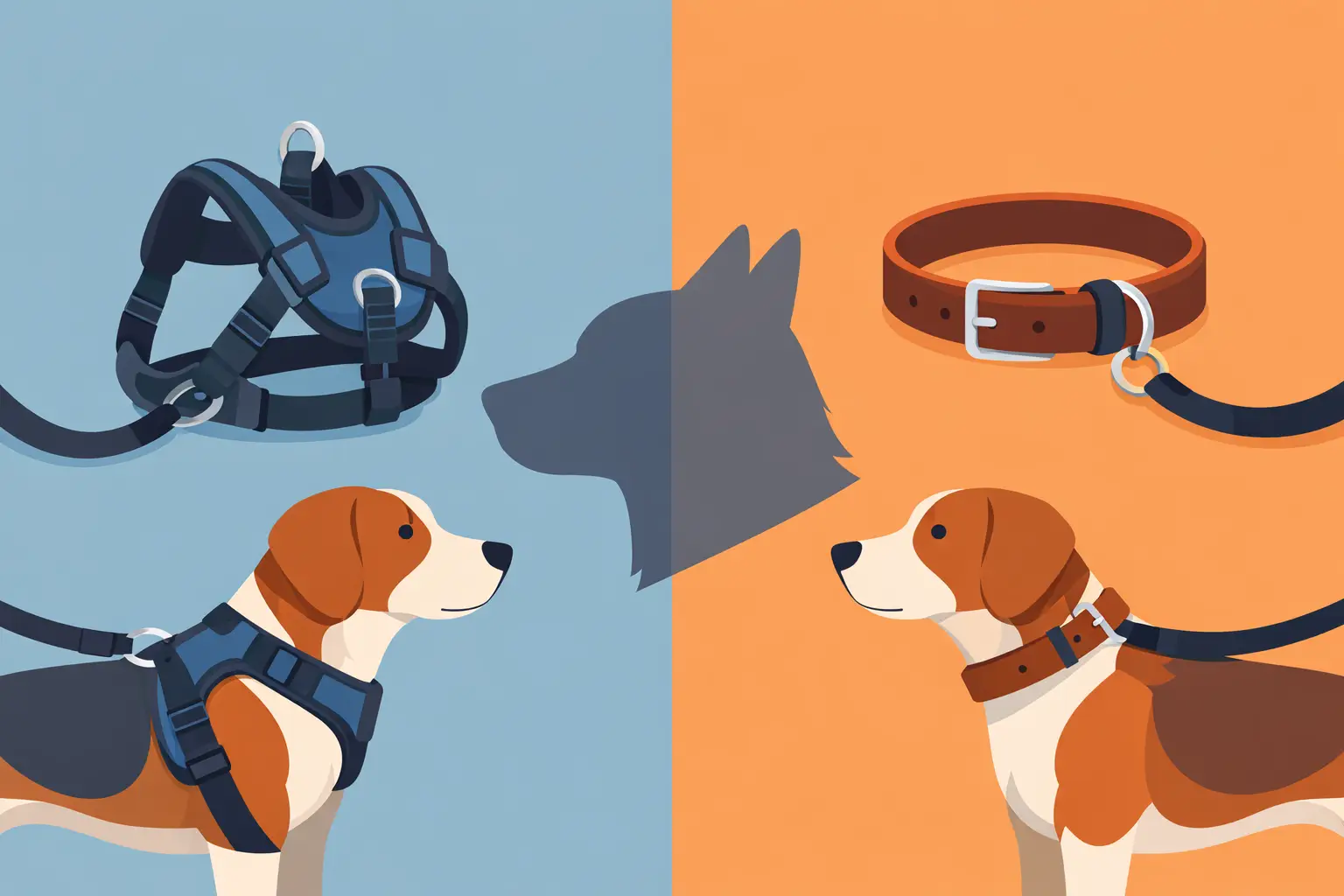
Choose a collar for identification and calm, loose-lead walks. Choose a harness when your dog pulls, has a sensitive neck, needs more body-based control or simply appears more comfortable in one. Plenty of dogs benefit from both: a collar for their tag and a harness for their adventures.
Most importantly, make the choice after watching your dog move. A relaxed body, easy stride and happy sniffing session are far better signs than any trend. When their gear fits well and the lead stays loose, your daily walk becomes what it should be: a little pocket of fresh air, connection and tail-wagging joy.