



How to Groom Dogs at Home Without the Drama
A post-walk whiff, a few mysterious knots behind the ears and suddenly your lounge-room floof is looking less ‘fresh from the salon’ and more ‘rolled in something questionable’. Learning how to groom dogs at home is not about chasing perfection. It is about keeping your dog comfortable, their coat healthy and your house a little less furry.
The secret is simple: small, regular grooming sessions beat a full-scale bathroom battle every time. Go slowly, use dog-specific products and let your pup build positive associations with the whole routine. Treats do not hurt either.
Set up before your dog arrives
Trying to find a brush while a wet dog shakes all over the bathroom is not a vibe. Set up your space first, ideally somewhere warm, non-slip and easy to clean. A bath, shower or laundry tub works for smaller dogs; larger dogs may be happier on a non-slip mat in the shower or outside on a warm day.
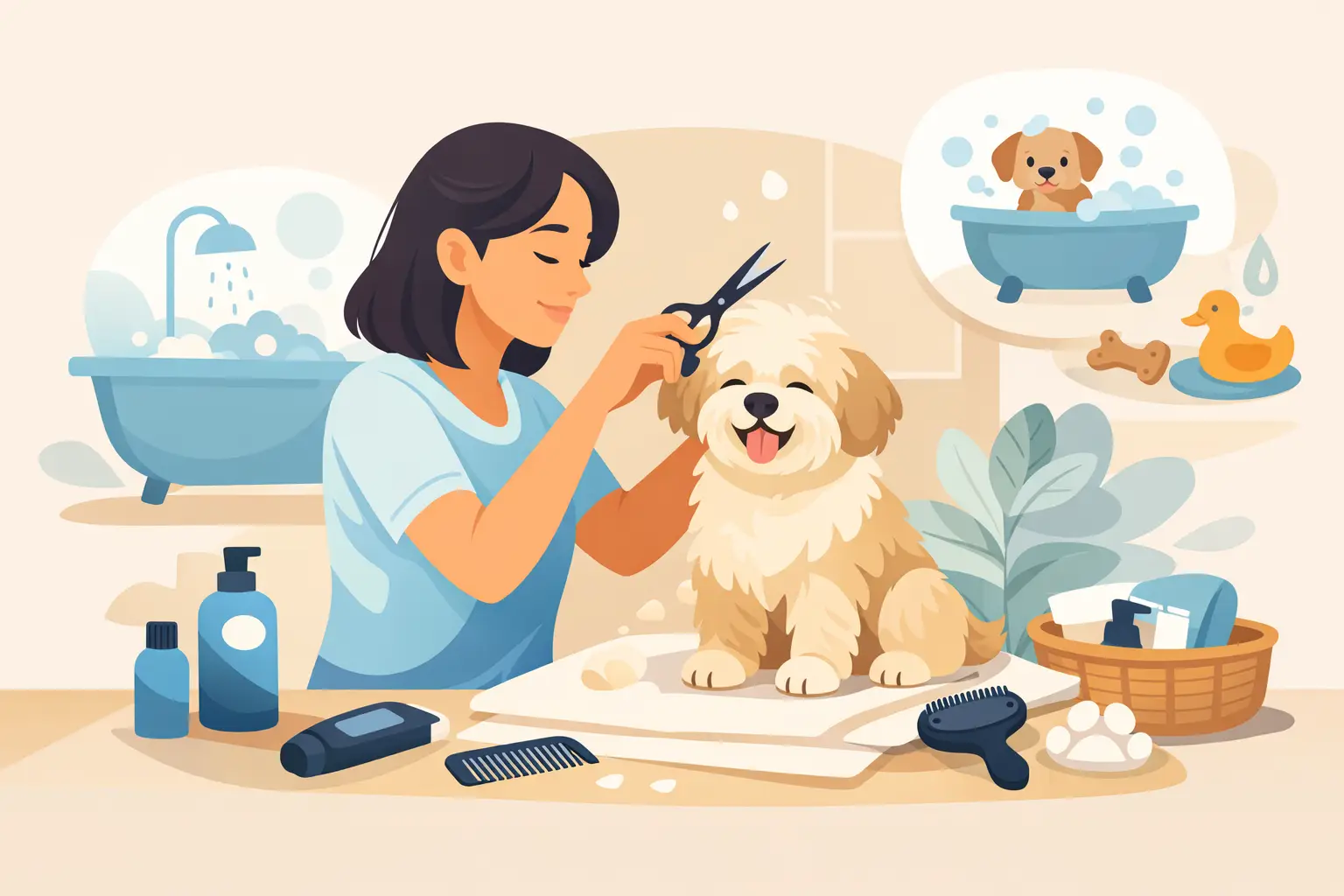
For a solid at-home session, have these essentials ready:
- A brush suited to your dog’s coat type
- A wide-tooth comb for checking knots and tangles
- Dog shampoo and conditioner, never human hair products
- Several absorbent towels and a dryer with a cool or low-heat setting
- Nail clippers or a dog nail grinder
- Treats and a calm, cheerful attitude
Choose grooming products made for dogs. Their skin has a different pH to ours, and heavily fragranced human shampoos can leave it dry, itchy or irritated. A quality dog shampoo and conditioner can help with softness, shine and manageability without loading the coat with harsh extras. Hound & Soul’s Australian-made, vegan grooming range is designed for exactly that kind of fresh, soft finish.
How to groom dogs at home, step by step
Start with a brush before the bath
Always brush first. Water can tighten mats, turning a manageable tangle into a proper problem. Work from the ends of the hair towards the skin in small sections, especially around the ears, collar line, armpits, tail and back legs.
If you find a knot, hold the hair at the base close to the skin to reduce pulling, then gently tease it apart with your fingers or a comb. Do not rip through it. If the mat sits tight against the skin, is large or feels painful, leave it to a professional groomer. Scissors and hidden skin folds are a risky combo, even for confident pet parents.
Short-coated dogs may only need a rubber brush or grooming mitt once a week. Curly, long-haired and double-coated dogs usually need more frequent brushing, often several times a week or daily during shedding season. There is no one-size-fits-all schedule – the coat in front of you tells the story.
Bathe with warm water and a light hand
Use lukewarm water. If it feels comfortably warm on the inside of your wrist, it is generally right for your dog. Thoroughly wet the coat, avoiding a direct spray into the eyes, ears and nose.
Dilute shampoo if the label allows it, then massage it through the coat rather than piling it onto one spot. Get into the areas that hold onto odour and grime: paws, belly, chest, under the collar and rear. Keep your voice calm and your movements unhurried. A dog who is unsure does not need a pep talk worthy of the footy grand final – they need to know nothing scary is happening.
Rinse longer than you think you need to. Shampoo residue is a common cause of itchy skin and a dull-looking coat. If your dog has a longer, dry or tangle-prone coat, follow with conditioner and give it the recommended contact time before rinsing thoroughly.
Most dogs do not need weekly baths. For many family dogs, every four to eight weeks is plenty, with paw wipes and regular brushing in between. More frequent washing may suit dogs that swim, get grubby at the park or have a skin-care plan from their vet. If your dog has persistent odour, flaking, redness or greasy skin, do not keep bathing in the hope it disappears. Book a vet check.
Dry properly, especially in thick coats
First, let your dog have one good shake. Then towel dry by pressing and squeezing the coat instead of scrubbing it into tangles. A high-absorbency towel is a game changer for dogs with dense fur.
For long, curly or double coats, use a pet dryer or hair dryer on low heat and low airflow. Keep it moving and brush as you dry to prevent fresh knots. Never use high heat close to the skin. Dogs can overheat or burn more easily than you might expect, and a damp undercoat can become musty if it stays wet for hours.
If your dog hates the dryer, introduce it away from grooming time. Turn it on at a distance, offer a treat, turn it off. Repeat over a few days. Tiny wins make for much calmer wash days.
Clean ears and eyes gently
Healthy ears generally need a quick look and a wipe around the outer flap, not a deep excavation. Use a dog-safe ear cleaner only as directed and never push cotton tips down the ear canal. A strong smell, redness, dark discharge, frequent head shaking or ear scratching calls for a vet, not another round of cleaning.
For sleepy eye crusts, soften them with a damp cotton pad and wipe away from the eye. Be particularly gentle with flat-faced breeds, whose facial folds may need regular drying and cleaning. Avoid perfumed wipes or products near the eyes.
Tackle nails little and often
Long nails can alter how a dog stands and walks, so nail care is about comfort as much as neatness. If you hear a constant click-clack on hard floors, it is probably time for a trim.
Start by handling paws during cuddles, rewarding calm behaviour. When your dog is comfortable, trim only the sharp tip of one nail at a time. On pale nails, avoid the pink quick inside. On dark nails, take very small amounts and check the centre of the cut nail as you go. A nail grinder can give more control, though some dogs prefer clippers because the job is faster.
If you nick the quick, stay calm. Apply styptic powder or cornflour with gentle pressure until bleeding stops. If your dog is frightened, call it for the day. Forcing the issue can make the next session much harder.
Finish with the details
Once your dog is dry, run a comb through the coat to find any lingering tangles. Check paws for grass seeds, cracked pads or irritated skin between the toes. Brush teeth with canine toothpaste if your dog is accustomed to it, and finish with a light dog-safe fragrance if your pup enjoys it. Keep fragrance off the face and never use it to cover up a skin or ear problem.
This is also the moment for a little style. A clean bandana, bow or freshly washed collar makes the ‘just groomed’ feeling last longer, even if your dog heads straight for the backyard five minutes later.
Know when to call in backup
Home grooming is brilliant for maintenance, bonding and keeping coats in good nick between appointments. But professional help is the safer choice for severe matting, difficult clipper cuts, anal gland concerns, highly reactive dogs or any dog with skin pain. Senior dogs and puppies may also need shorter, gentler sessions with plenty of breaks.
A good rule: stop before your dog has had enough. End on a treat, a cuddle or a quick game, even if you only brushed one side today. The dog who learns grooming means comfort, snacks and praise is the dog who will happily put a paw forward next time.