
Is Dog Cologne Safe for Your Pup?
You know the moment. Your dog has just come back from the park, rolled in something deeply offensive, then marched into the house like they own the place. Fair enough to ask: is dog cologne safe, or are you just swapping eau de wet dog for a bigger grooming problem?
The short answer is yes, dog cologne can be safe – but only when it is made for dogs and used properly. That “made for dogs” part does a lot of heavy lifting. A proper dog fragrance should work with canine skin, coat and noses, not against them. If a product is overloaded with harsh alcohols, mystery fragrance blends or ingredients better suited to human perfume counters, your pup’s skin may let you know very quickly.
Is dog cologne safe when it is made for dogs?
Generally, yes. A well-formulated dog cologne is designed to sit lightly on the coat, freshen between washes and leave your pup smelling much less like a damp towel. The safest products are created specifically for canine skin, which is more delicate than human skin and has a different pH balance.
That matters more than many pet parents realise. Human perfume is usually far too strong for dogs, both on the skin and for their sense of smell. Dogs experience scent on a completely different level, so something that feels subtle to you can be overwhelming to them. Add the wrong solvents or fragrance materials and you are looking at possible itching, dryness or general discomfort.
A dog cologne should never be treated like a cover-up for poor coat care either. It is a finishing product, not a substitute for bathing, brushing or checking whether there is an underlying skin issue causing odour.
What makes a dog cologne safer?
This is where formulation matters more than fancy packaging. A safe dog cologne is not just about smelling nice. It should be created with skin compatibility front of mind.
Look for products that are pH balanced for dogs and free from ingredients that can weigh down or irritate the coat. Many dog owners also prefer formulas that are vegan and free from parabens, silicones, petroleum and animal-derived ingredients. That does not automatically make every product perfect for every dog, but it is a strong sign the brand is thinking carefully about what goes into the bottle.
The quality of the fragrance load matters too. A good dog cologne should smell clean and pleasant without punching you in the face the second you spray it. If the scent is absurdly intense, there is a good chance it is too much for your dog as well.
Australian-made grooming products can also offer an extra layer of trust for local shoppers who want clear standards and straightforward formulation claims. For many pet parents, that peace of mind is part of the purchase.
Ingredients and red flags to watch
If you are standing there reading a label while your dog tries to lick the bottle, keep an eye out for a few warning signs.
The first is anything clearly intended for humans rather than pets. Human body sprays, perfume mists and essential oil blends are not a shortcut. They are a hard no. Dogs groom themselves with their tongues, rub on bedding and are far more exposed to what sits on their coat than we are.
The second is vague or incomplete labelling. If a brand says almost nothing about how the product is formulated, what it leaves out or how it should be used, that is not very reassuring.
The third is an ingredient list that reads more like industrial chemistry than coat care. Not every long ingredient name is bad, but harsh alcohol-heavy formulas can be drying, especially on dogs with sensitive skin. If your dog already struggles with flaking, redness or recurrent itchiness, you want to be even more careful.
And then there is the strongest red flag of all: your dog’s reaction. If they scratch after application, sneeze excessively, rub their face on the rug or seem bothered by the scent, stop using it.
When dog cologne is a good idea
Dog cologne shines between baths. It is handy after a walk, after daycare, after a snooze on suspiciously smelly bedding or before visitors arrive and your dog insists on greeting everyone nose-first.
It can also be useful for dogs who are bathed regularly but still pick up everyday odours. Some coats seem to hold onto smell more than others, especially dense, fluffy or water-loving coats. In those cases, a light spritz on the coat can help your dog smell fresher without overbathing, which can strip natural oils and upset the skin barrier.
For groomers, dog cologne is also part of the finishing touch. It rounds out the grooming experience and gives that clean, polished, just-left-the-salon feel that clients notice straight away.
When dog cologne is not the answer
If your dog smells consistently bad, cologne is not the fix. Persistent odour can point to skin infections, ear issues, dental trouble, anal gland problems or a coat that needs a better wash-and-dry routine. In that case, fragrance is just trying to put a bow on the problem.
You should also skip cologne on broken skin, irritated areas or dogs with active dermatological issues unless your vet has given the green light. Puppies, elderly dogs and highly sensitive dogs may need a slower introduction as well.
And if your dog hates it, respect that. Some pups are perfectly happy with a light mist. Others act like you have personally betrayed them. Not every dog wants a signature scent, and that is fine.
How to use dog cologne properly
The safest dog cologne in the world can still be used badly. Application matters.
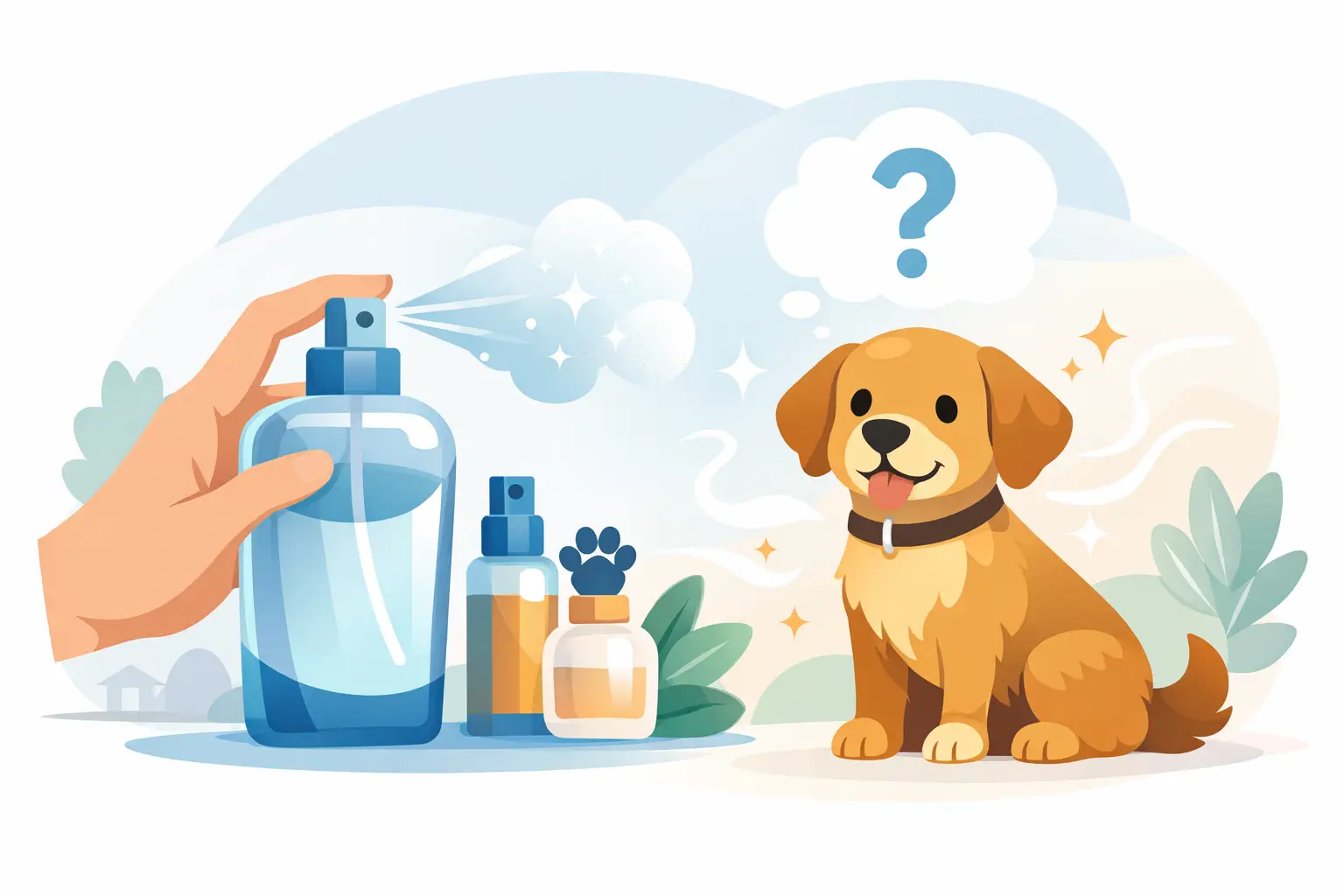
Start lightly. One or two sprays is often plenty, depending on coat size and density. You do not need to fumigate the lounge room. Mist onto the coat from a sensible distance and avoid the face, ears, eyes, nose and any sensitive areas. Many owners find it best to spray onto a brush or their hands first for smaller dogs or nervous dogs, then smooth it through the coat.
Always patch test if it is a new product, especially if your dog has reactive skin. A small amount on one area can tell you a lot over the next 24 hours.
Use it on a clean or reasonably clean coat for best results. Layering fragrance over dirt, oil and yesterday’s mystery smell does not create magic. It just creates scented mystery smell.
So, is dog cologne safe for sensitive dogs?
Sometimes yes, sometimes no – and that is where honesty matters.
A gentle, well-formulated dog cologne may be absolutely fine for a sensitive dog, especially if used sparingly and away from delicate areas. But sensitivity is not one-size-fits-all. One dog can wear fragrance beautifully, while another reacts to the mildest formula.
If your dog has a history of allergies, skin flare-ups or grooming product reactions, choose cautiously and introduce slowly. Ideally, stick with formulas that are made with coat care in mind rather than novelty. Products built around premium grooming standards tend to perform better here than cheap supermarket sprays with a big scent and not much else going for them.
For pet parents who care about ingredients and want the polished finish without the ingredient nasties, that is exactly why brands like Hound & Soul focus on Australian-made, vegan, pH balanced formulas without parabens, silicones, petroleum or animal-derived ingredients. Nice scent is only half the job. The other half is earning your trust.
The real test: your dog should smell better, not feel worse
That is the simplest way to look at it. A good dog cologne should leave the coat fresh, soft and comfortable. It should not trigger scratching, dull the coat, dry the skin or make your dog desperate to roll on the nearest patch of grass in protest.
If you choose a formula made for dogs, pay attention to ingredients and use it with a light hand, cologne can be a genuinely useful part of your grooming routine. It is not fluff. It is just one more way to keep your pup looking polished and smelling a whole lot more house-friendly.
And if your dog ends up smelling better than your boyfriend, well, that is hardly the product’s fault.