

Why Does My Dog Smell? Common Causes
Your dog strolls in from the backyard, jumps on the couch, and suddenly the whole room smells… off. If you’ve found yourself asking why does my dog smell, you’re definitely not alone. A bit of doggy scent is normal, but a strong, sour, fishy or musty odour usually means something specific is going on – and no, covering it up with endless pats and wishful thinking won’t fix it.
The good news is that dog smells are often manageable once you work out where they’re coming from. The less fun news is that the source is not always the coat itself. Skin, ears, teeth, paws, anal glands, diet and even damp bedding can all be part of the problem.
Why does my dog smell even after a bath?
If your pup still smells funky after a wash, the issue may not be simple dirt. A bath can remove surface grime, but it won’t solve an underlying skin condition, ear infection or dental problem. In some cases, using the wrong shampoo can make things worse by stripping the coat, irritating the skin and throwing the natural balance out of whack.
That’s where a quality grooming routine matters. A dog’s skin is more delicate than ours, so products need to be pH balanced and made for canine skin, not borrowed from your own shower shelf. If the coat is left damp, not rinsed properly or washed with harsh formulas, odour can linger or bounce back fast.
There’s also the coat type factor. Oodles, spaniels, retrievers and other breeds with dense or curly coats can trap moisture, oil and debris close to the skin. Short-haired dogs are not immune either, but thick coats tend to hold onto that eau de wet dog for longer.
The most common reasons your dog smells
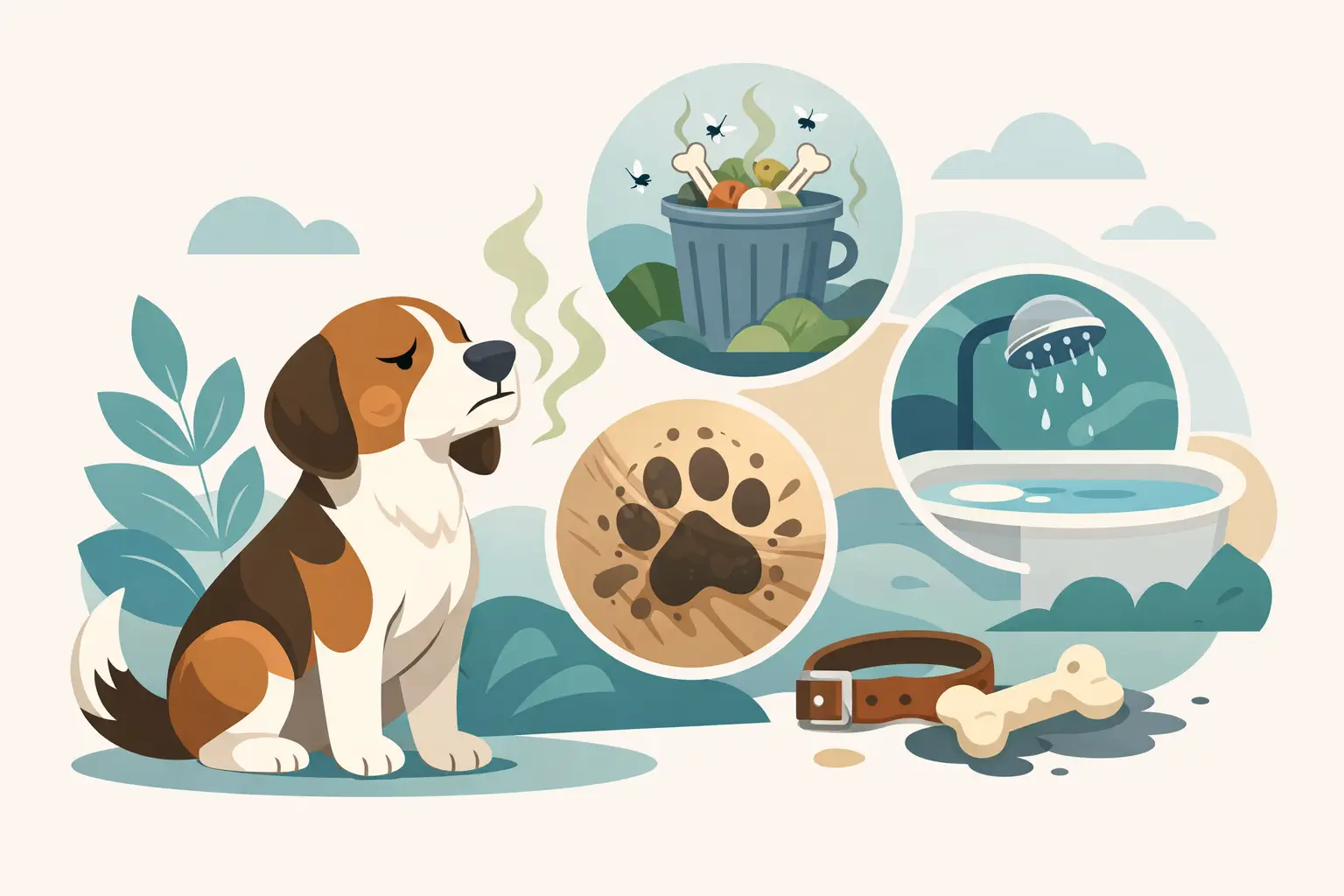
A classic dog smell often comes down to natural oils, sweat from paw pads, outdoor adventures and whatever mystery substance your dog has decided to roll in today. But when the smell is stronger than usual, it helps to narrow it down.
A yeasty or musty smell can point to skin irritation, especially if your dog is also scratching, licking or rubbing along furniture. Dogs with allergies often get oily skin or secondary yeast overgrowth, and that creates a very recognisable stale smell.
A sour smell around the face or ears can mean an ear issue. Floppy-eared breeds are especially prone because less airflow creates a warm, moist environment. If you notice redness, head shaking or brown discharge, it’s time to get those ears checked.
Bad breath is another big one. Doggy breath is one thing. Breath that smells rotten, metallic or unusually strong is another. Plaque, gum disease and infected teeth can all create serious odour, and they’re far more common than many owners realise.
Then there are the paws. If your dog’s feet smell oddly like corn chips, that can actually be linked to normal bacteria and yeast on the skin. A mild version is common, but if the smell is intense and your dog won’t stop licking their paws, irritation or infection may be brewing.
And yes, anal glands deserve a mention. Not glamorous, but very real. A sudden fishy smell, especially on bedding or after your dog scoots across the floor, often points in that direction.
Why does my dog smell like fish, corn chips or mould?
Specific smells can offer useful clues.
A fishy smell is commonly linked to anal glands, though it can also come from the mouth in some cases. If it keeps happening, your vet or groomer can help assess whether the glands are causing trouble.
A corn chip smell from the paws is often harmless in small doses, but if it comes with redness, constant licking or greasy fur between the toes, it may be worth investigating.
A mouldy, damp-laundry smell usually points back to moisture. Dogs that swim a lot, get bathed often or stay damp under a thick coat can develop a persistent musty odour. Drying the coat properly matters more than many people think.
A faecal smell around the rear end may be as simple as dirty fur, especially in long-coated breeds, senior dogs or pups with tummy trouble. A sanitary trim and regular washing can make a huge difference.
When smell is a health clue, not just a grooming issue
Sometimes odour is your first hint that something medical is going on. If the smell appears suddenly, becomes very strong or comes with symptoms like scratching, hair loss, redness, discharge, vomiting or behaviour changes, it’s best not to play guessing games.
Skin infections, ear infections, dental disease and allergies are common culprits. Less commonly, a strange body odour can be linked to hormonal or metabolic issues. That’s not the most likely answer, but it sits firmly in the good-to-check category if the smell is persistent and unexplained.
There’s a bit of trade-off here. Not every whiff needs a vet visit, and plenty of dogs just need a better coat-care routine. But if your dog smells unpleasant no matter what you do at home, the smartest move is to rule out an underlying issue first.
How to make your dog smell better without overdoing it
Freshening your dog up should be about supporting skin and coat health, not blasting them with heavy fragrance and hoping for the best. The goal is clean, balanced and genuinely pleasant.
Start with regular brushing. Loose fur, dirt and trapped moisture all contribute to odour, and brushing helps lift them out before they settle into the coat. It also spreads natural oils more evenly, which can improve shine and reduce that greasy smell.
Bathing helps too, but more is not always better. Some dogs need frequent washing, especially if they’re active, curly-coated or prone to getting grubby. Others do better on a more spaced-out schedule. It depends on coat type, lifestyle and skin sensitivity. The trick is choosing a gentle dog shampoo that cleans properly without leaving the skin stripped or irritated.
Conditioner is worth using, particularly on longer or textured coats. A well-conditioned coat is easier to dry, easier to brush and less likely to trap stale smells. For dogs who need a little top-up between baths, a dog-safe cologne or fragrance can be a handy finishing touch – ideally one designed to complement grooming, not replace it.
Don’t forget the basics around the dog. Wash bedding, clean collars and harnesses, and keep grooming tools fresh. You can give your dog a beautiful bath and still end up with a funky pup if they hop straight back onto a pongy bed.
A smarter grooming routine for fresh-smelling dogs
If odour is a repeat problem, routine usually beats random effort. A quick brush once in a blue moon and a panic bath before visitors arrive is not quite the dream team.
Aim for consistent coat care that suits your dog’s breed and habits. Dogs that love the beach, the park or a good puddle stomp will naturally need more maintenance. So will dogs with skin folds, thick undercoats or long feathering around the legs and rear.
This is where premium grooming products earn their spot in the cupboard. Formulas that are Australian made, vegan, pH balanced and free from heavy fillers can help you clean the coat thoroughly while being kinder to skin. That matters for everyday pet parents, and it matters even more for groomers working through multiple coats and sensitivities in a salon setting.
If you want your dog to smell better for more than five minutes, think beyond the quick fix. Clean coat, healthy skin, dry fur, fresh ears, tidy teeth and washed bedding all work together. That’s the kind of routine that gets your pup smelling less like mystery swamp creature and more like the best-dressed dog at brunch.
A dog that smells a bit like dog is normal. A dog that smells strongly, strangely or constantly is asking you to look closer. Usually the answer is simple, occasionally it’s medical, and either way your nose is giving you useful information. Start with the source, not the cover-up, and your pup will be fresher, more comfortable and a lot nicer to cuddle.